Concerns: Business-oriented results
Purpose: Designing, deciding
Scope: Strategy
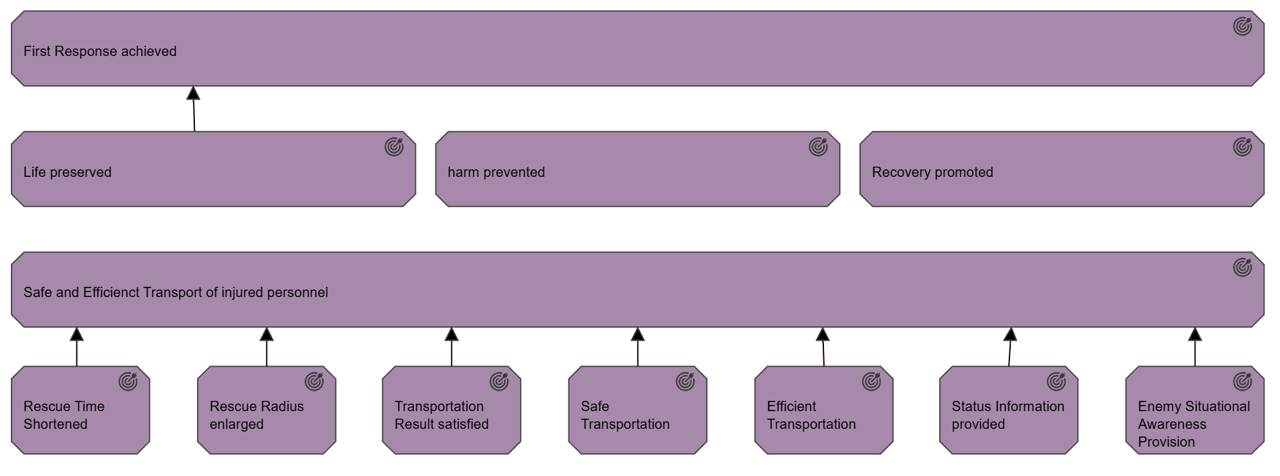
The outcome realization viewpoint is used to show how the highest-level, business-oriented results are produced by the capabilities and underlying core elements.

Concerns: Business-oriented results
Purpose: Designing, deciding
Scope: Strategy
The outcome realization viewpoint is used to show how the highest-level, business-oriented results are produced by the capabilities and underlying core elements.

Concerns: Architecture strategy and tactics, motivation
Purpose: Designing, deciding
Scope: Strategy
The resource map viewpoint allows the business architect to create a structured overview of the resources of the enterprise. A resource map typically shows two or three levels of resources across the entire enterprise. It can, for example, be used as a heat map to identify areas of investment. In some cases, a resource map may also show relationships between resources and the capabilities they are assigned to.
Concerns: Architecture vision and policies, motivation
Purpose: Deciding, informing
Scope: Implementation and Migration
A project viewpoint is primarily used to model the management of architecture change. The “architecture” of the migration process from an old situation (current state Enterprise Architecture) to a new desired situation (target state Enterprise Architecture) has significant consequences on the medium and long-term growth strategy and the subsequent decision-making process. Some of the issues that should be taken into account by the models designed in this viewpoint are:
Furthermore, there are several other governance aspects that might constrain the transformation process, such as internal and external cooperation, project portfolio management, project management (deliverables, goals, etc.), plateau planning, financial and legal aspects, etc.