Goal Realization Viewpoint: Archimate

Concerns: Architecture mission, strategy and tactics, motivation
Purpose: Designing, deciding
Scope: Motivation

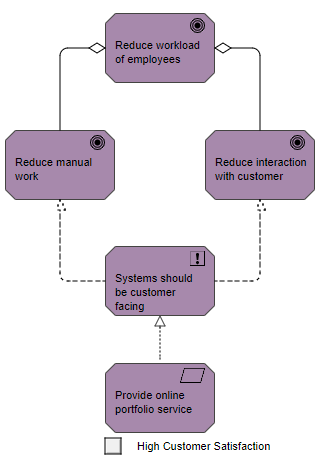
The goal realization viewpoint allows a designer to model the refinement of (high-level) goals into more tangible goals, and the refinement of tangible goals into requirements or constraints that describe the properties that are needed to realize the goals. The refinement of goals into sub-goals is modeled using the aggregation relationship. The refinement of goals into requirements is modeled using the realization relationship.

In addition, the principles may be modeled that guide the refinement of goals into requirements.

Requirements Realization Viewpoint : Archimate

Concerns: Architecture strategy and tactics, motivation
Purpose: Designing, deciding, informing
Scope: Motivation

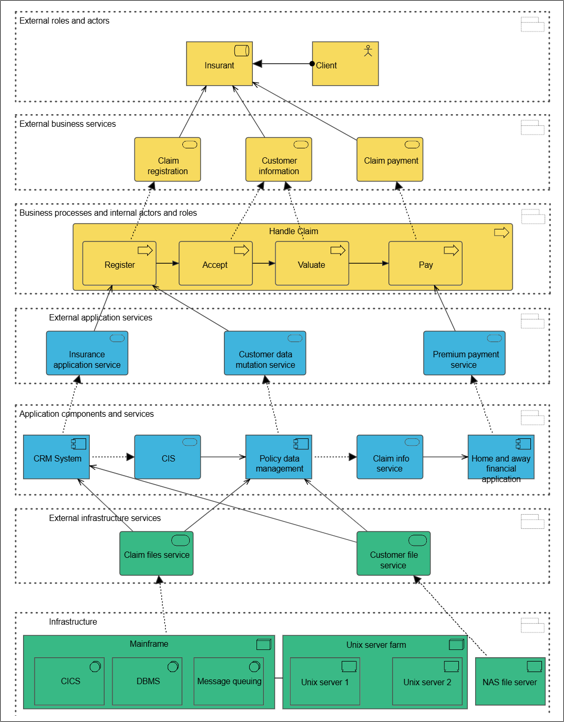
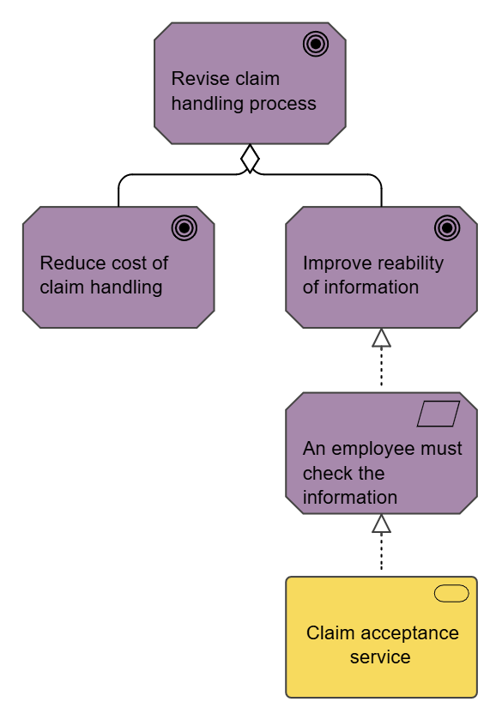
The requirements realization viewpoint allows the designer to model the realization of requirements by the core elements, such as business actors, business services, business processes, application services, application components, etc. Typically, the requirements result from the goal refinement viewpoint.

In addition, this viewpoint can be used to refine requirements into more detailed requirements. The aggregation relationship is used for this purpose.


Motivation Viewpoint : Archimate

Concerns: Architecture strategy and tactics, motivation
Purpose: Designing, deciding, informing
Scope: Motivation

The motivation viewpoint allows the designer or analyst to model the motivation aspect, without focusing on certain elements within this aspect. For example, this viewpoint can be used to present a complete or partial overview of the motivation aspect by relating stakeholders, their primary goals, the principles that are applied, and the main requirements on services, processes, applications, and objects.

Capability Map Viewpoint : Archimate

Concerns: Architecture strategy and tactics, motivation
Purpose: Designing, deciding
Scope: Strategy

The capability map viewpoint allows the business architect to create a structured overview of the capabilities of the enterprise. A capability map typically shows two or three levels of capabilities across the entire enterprise. It can, for example, be used as a heat map to identify areas of investment. In some cases, a capability map may also show specific outcomes delivered by these capabilities.

Outcome Realization Viewpoint : Archimate

Concerns: Business-oriented results
Purpose: Designing, deciding
Scope: Strategy

The outcome realization viewpoint is used to show how the highest-level, business-oriented results are produced by the capabilities and underlying core elements.

Resource Map Viewpoint : Archimate

Concerns: Architecture strategy and tactics, motivation
Purpose: Designing, deciding
Scope: Strategy

The resource map viewpoint allows the business architect to create a structured overview of the resources of the enterprise. A resource map typically shows two or three levels of resources across the entire enterprise. It can, for example, be used as a heat map to identify areas of investment. In some cases, a resource map may also show relationships between resources and the capabilities they are assigned to.

Project Viewpoint : Archimate

Concerns: Architecture vision and policies, motivation
Purpose: Deciding, informing
Scope: Implementation and Migration

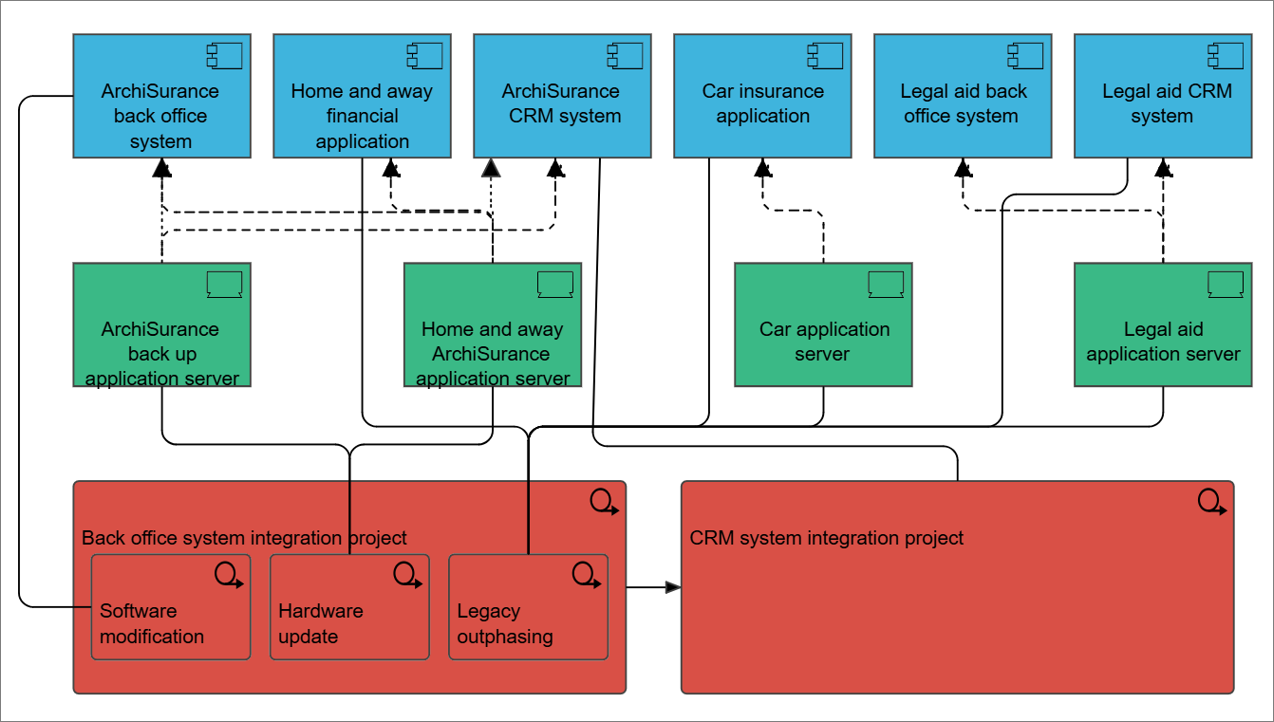
A project viewpoint is primarily used to model the management of architecture change. The “architecture” of the migration process from an old situation (current state Enterprise Architecture) to a new desired situation (target state Enterprise Architecture) has significant consequences on the medium and long-term growth strategy and the subsequent decision-making process. Some of the issues that should be taken into account by the models designed in this viewpoint are:

  • Developing a fully-fledged organization-wide Enterprise Architecture is a task that may require several years.
  • All systems and services must remain operational regardless of the presumed modifications and changes of the Enterprise Architecture during the change process.
  • The change process may have to deal with immature technology standards (e.g., messaging, security, data, etc.).
  • The change has serious consequences for the personnel, culture, way of working, and organization.

Furthermore, there are several other governance aspects that might constrain the transformation process, such as internal and external cooperation, project portfolio management, project management (deliverables, goals, etc.), plateau planning, financial and legal aspects, etc.

Organization Viewpoint : Archimate

Concerns: Identification of competencies, authority, and responsibilities
Purpose: Designing, deciding, informing
Scope: Single layer/Single aspect

The organization viewpoint focuses on the (internal) organization of a company, department, network of companies, or of another organizational entity. It is possible to present models in this viewpoint as nested block diagrams, but also in a more traditional way, such as organizational charts. The organization viewpoint is very useful in identifying competencies, authority, and responsibilities in an organization.

Migration Viewpoint : Archimate

Concerns: History of models
Purpose: Designing, deciding, informing
Scope: Implementation and Migration

The migration viewpoint entails models and concepts that can be used for specifying the transition from an existing architecture to a desired architecture.

Product Viewpoint : Archimate

Concerns: Product development, value offered by the products of the enterprise
Purpose: Designing, deciding
Scope: Multiple layer/Multiple aspect

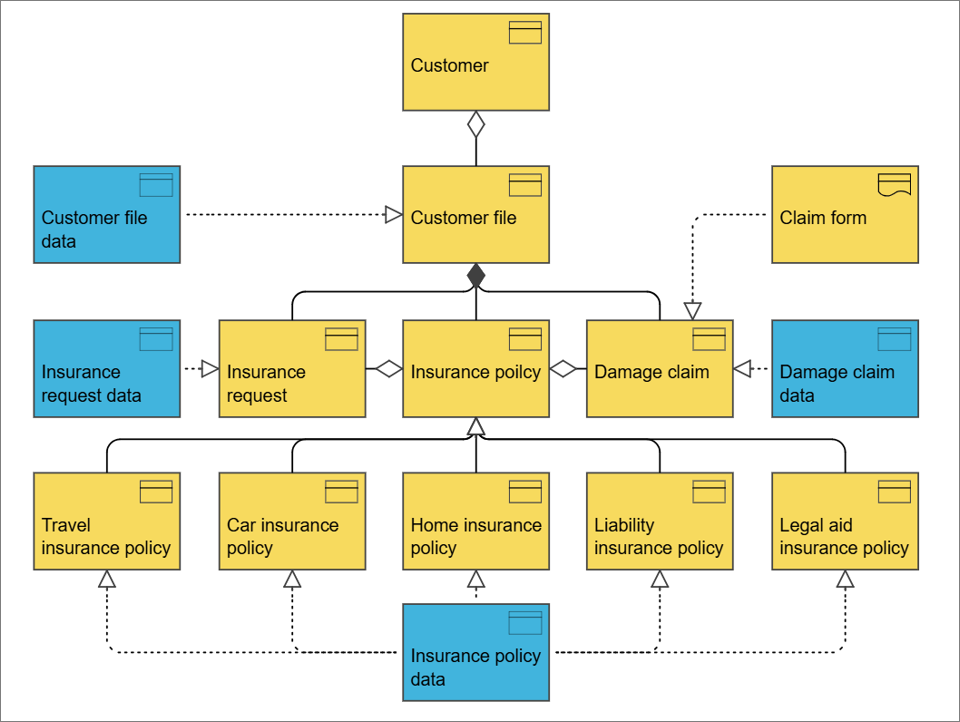
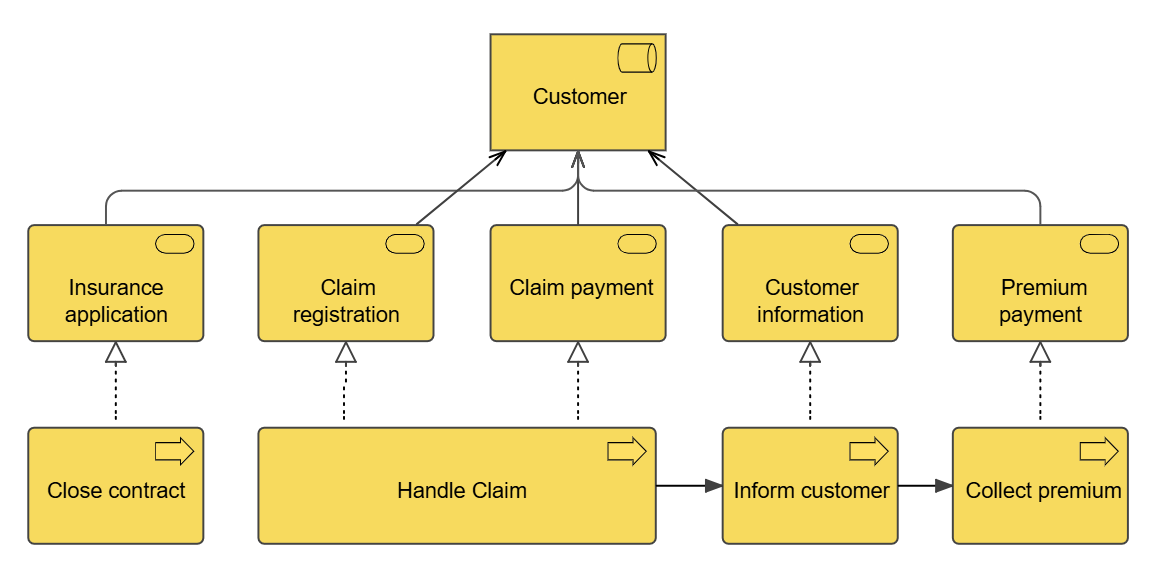
The product viewpoint depicts the value that these products offer to the customers or other external parties involved and shows the composition of one or more products in terms of the constituting (business, application, or technology) services, and the associated contract(s) or other agreements. It may also be used to show the interfaces (channels) through which this product is offered, and the events associated with the product. A product viewpoint is typically used in product development to design a product by composing existing services or by identifying which new services have to be created for this product, given the value a customer expects from it. It may then serve as input for business process architects and others that need to design the processes and ICT realizing these products.