Interaction

Interaction refers to the way in which different components or objects within a system interact or communicate with each other to perform specific tasks or functions. Interaction can involve various types of communication, such as messages, events, or function calls.

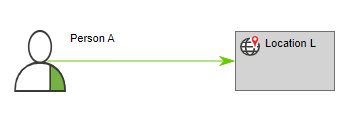
For example, in a system where a customer places an order for a product, the interaction might be illustrated through a line connecting the customer object to the order object, and another line connecting the order object to the product object. The lines would represent the interactions between the objects, since the customer interacts with the order, and the order interacts with the product.
Integration Flow

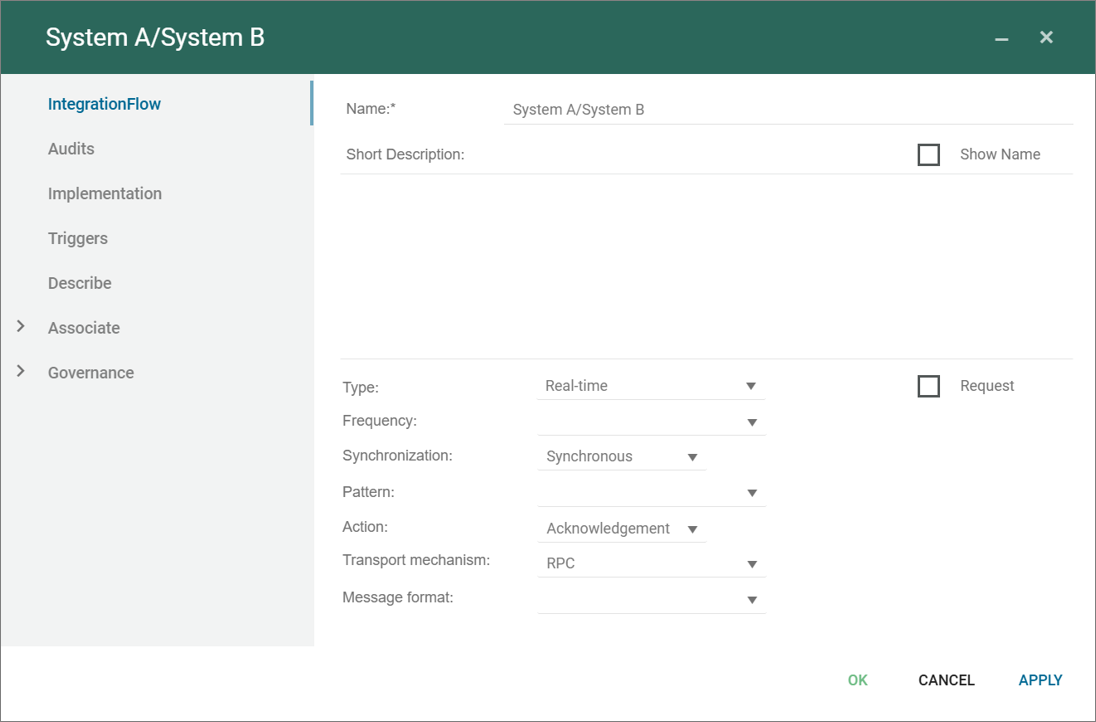
This connection describes an integration flow between two systems.

Information Requirement DMN

Information Requirement in DMN (Decision Model and Notation) refers to the concept of specifying the information required to make a decision within a business process. This can include the data, information, or knowledge that is needed to support the decision-making process, as well as the sources of that information.

For example, a line might connect a decision to a data source to represent how the decision relies on information from that data source. Similarly, a line might connect a knowledge base to a decision to represent how the decision relies on knowledge from that knowledge base.

Include

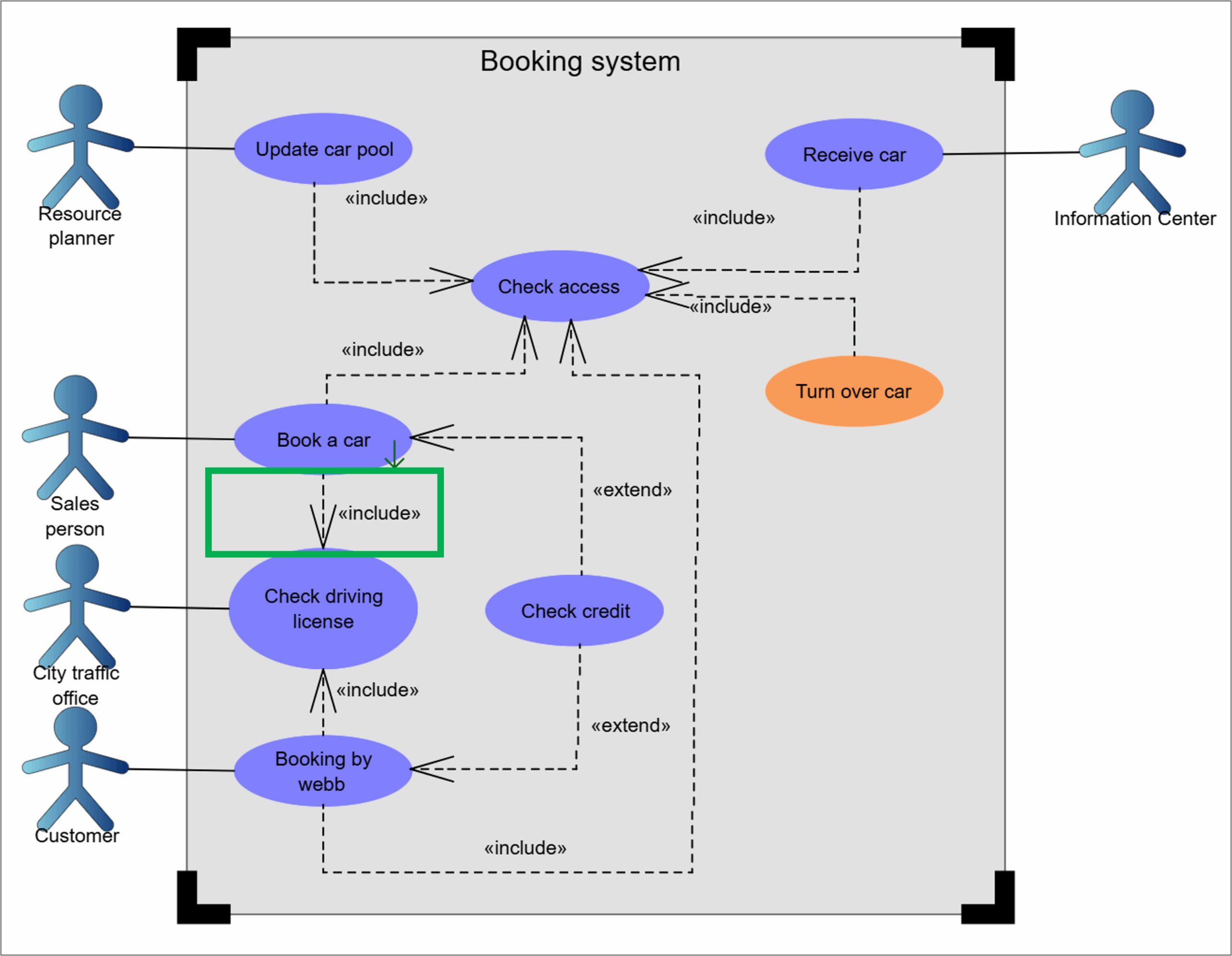
The include relationship adds additional functionality not specified in the base use case. The <<Include>> relationship is used to include common behavior from an included use case into a base use case in order to support the reuse of common behavior.

Impact Quantity

Impact quantity refers to the measurement of the effect or impact that a particular component or factor has on the overall system. It is used to quantify the magnitude or extent of the impact that a particular variable or input has on the system.

Guide

A “guide” refers to a set of instructions or procedures that are used to carry out a specific business process.

For example a restaurant using a recipe to prepare a dish (the business object) as part of their food preparation process (the business process). The recipe serves as a guide for the chefs to follow, ensuring that the dish is prepared consistently and to the desired quality every time it is ordered by a customer.

The “guide” connection links a business object to instructions or procedures that guide the execution of a business process, the “resource” connection links a business object to the specific resources needed to carry out that process.

Extend

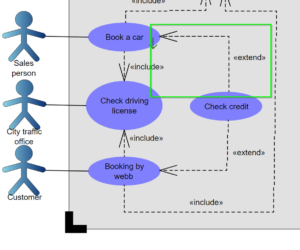
Extend relationship: The use case is optional and comes after the base use case. It is represented by a dashed arrow in the direction of the base use case with the notation <<extend>>

Derivation

Description of this template will be available soon.